Five Networking Approaches That Are Actually Moving the Needle for Professionals in 2024
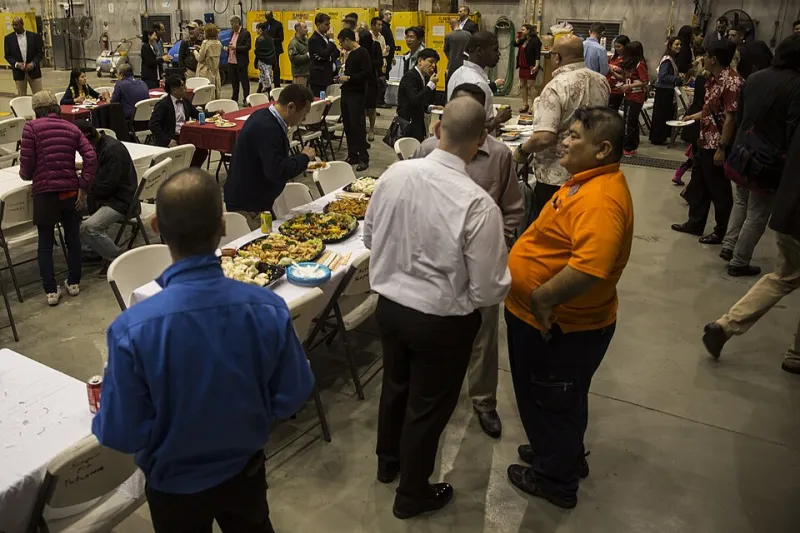
Photo: Cpl. Royce Dorman, Public domain, via Wikimedia Commons
For a concept as universally acknowledged as networking, it is remarkable how little the conventional advice has evolved. Attend events. Introduce yourself. Exchange contact information. Follow up. Repeat.
The formula made reasonable sense in an era when professional information was scarce and physical proximity was the primary mechanism for meeting new people. In 2024, it is largely inadequate — and in some cases, actively counterproductive.
Professionals today operate in a landscape shaped by hybrid work arrangements, AI-assisted research, and an abundance of digital communication channels. The tactics that generate genuine relationship capital have shifted accordingly. What follows are five approaches that experienced networkers, event professionals, and business development specialists consistently identify as effective in the current environment.
1. Pre-Event Research and Strategic Targeting
Showing up to a conference or business gathering without preparation is the professional equivalent of cold calling. You may get lucky occasionally, but you are leaving most of your potential value on the table.
Effective networkers in 2024 treat in-person events as the culmination of a research process that begins days or weeks in advance. Most professional conferences now publish attendee lists, speaker rosters, or at minimum, organizational affiliations of registered participants. Some business centers and event platforms offer dedicated apps or portals where attendees can browse profiles and signal mutual interest before arriving.
The goal is not to script every interaction — that approach tends to produce conversations that feel transactional rather than genuine. The goal is to arrive with a clear sense of two or three people whose work genuinely interests you, a specific reason for wanting to connect with each of them, and enough familiarity with their professional background to ask a question that demonstrates real engagement rather than surface-level awareness.
This preparation transforms an introduction from a generic exchange into the beginning of a substantive conversation.
2. Leading With Shared Interest Rather Than Professional Identity
The standard networking opener — "What do you do?" — is not inherently problematic, but it immediately frames the interaction in transactional terms. Both parties begin mentally cataloging whether the other person is commercially useful, and the conversation rarely escapes that register.
A growing number of professionals have found that leading with shared non-professional interests — a book, a challenge common to their industry, a genuine observation about the event itself — creates a fundamentally different relational dynamic. When two people connect first as human beings with overlapping interests or perspectives, the commercial dimension of the relationship develops on a more durable foundation.
This approach is particularly effective at niche industry gatherings and professional association events, where attendees already share occupational context. In those settings, the professional common ground is assumed. The differentiating question becomes whether the two of you actually enjoy talking to each other.
Business relationships that begin with authentic personal rapport consistently demonstrate greater longevity and mutual investment than those that begin with a pitch.
3. The Strategic Follow-Up That Goes Beyond "Great to Meet You"
More networking relationships die in the follow-up phase than in any other. The culprit is almost always a message so generic it provides no evidence that the sender paid attention during the original conversation.
"It was great meeting you at the conference. I would love to stay connected" communicates nothing except that you remember the other person exists. It places the entire burden of continuing the relationship on the recipient.
The professionals generating the most value from their networking investments are sending follow-up communications that reference something specific from the conversation, offer something genuinely useful — an article, an introduction, a resource relevant to a challenge the person mentioned — and propose a clear next step with a low barrier to acceptance.
"Following up on our conversation about the distribution challenges your team is navigating — I came across this analysis from the National Retail Federation that addresses exactly what you described. Happy to share the full report if useful. Would a 20-minute call next week make sense?" This message demonstrates attention, provides immediate value, and makes a concrete ask. It is far more likely to generate a response than its generic counterpart.
4. Building a Presence in Niche Professional Communities
The most durable professional networks are not built at large-scale events — they are built through sustained participation in smaller, more focused communities. Industry-specific Slack workspaces, regional professional associations, specialized LinkedIn groups, and niche trade organizations all offer environments where consistent, substantive contribution builds reputation over time.
In these communities, the networking dynamic is fundamentally different from the conference floor. Rather than making a first impression in a two-minute conversation, you build familiarity through accumulated interactions — a thoughtful comment on a colleague's post, a resource shared in response to a question, a perspective offered in an online discussion. By the time you meet these connections in person at a conference or corporate event, you are not strangers. You are acquaintances with established credibility.
For professionals operating in hybrid or remote-first environments, this approach is particularly valuable. Physical proximity is no longer a prerequisite for relationship-building; consistent, visible engagement in the right communities can substitute effectively.
5. Using In-Person Gatherings to Deepen Existing Relationships
Conventional networking advice treats every event as an opportunity to maximize new introductions. A more sophisticated approach recognizes that in-person time is often most valuable when invested in deepening relationships that already exist in a nascent or primarily digital form.
The professional you have interacted with online for six months but never met in person represents a far more accessible conversion opportunity than a complete stranger. An in-person conversation at a conference or business center event can accomplish in 30 minutes what might take six months of digital exchange to achieve.
Prioritize these "upgrade" conversations at your next event. Identify three to five people in your existing network with whom you have had meaningful but exclusively digital interaction, and make a point of connecting with them in person. The result is often a relationship that moves from peripheral awareness to genuine professional alliance.
Putting the Strategies Together
None of these approaches requires extraordinary social skill or an extroverted personality. What they require is intentionality — the willingness to treat professional relationship-building as a deliberate practice rather than a passive byproduct of showing up.
The professionals who are building the most commercially valuable networks in 2024 are not the loudest voices in the room or the most prolific card distributors. They are the ones who arrive prepared, engage authentically, follow through specifically, and invest consistently in the communities that matter most to their professional trajectory.
The tools and contexts have evolved considerably. The fundamental principle has not: meaningful relationships are built through genuine, sustained attention.