Second-Tier Cities, First-Rate Connections: The Rise of Regional Business Hubs in American Corporate Culture
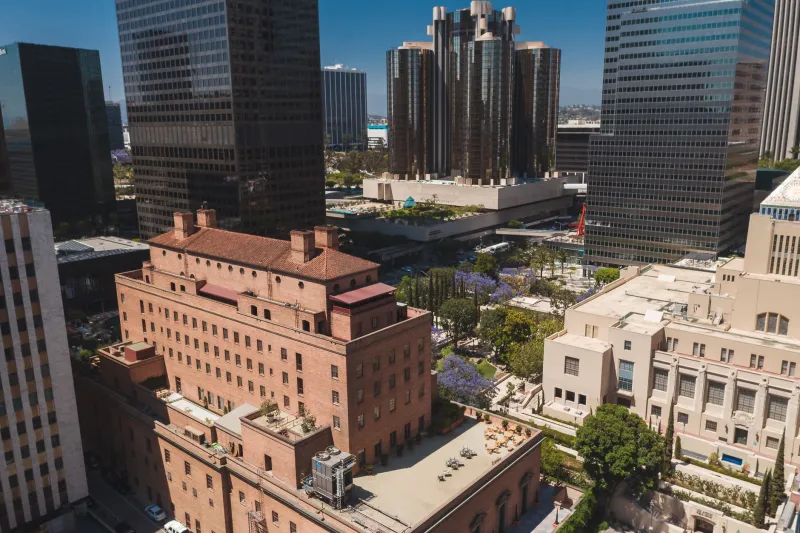
For decades, the geography of American corporate conferencing followed a predictable logic. Significant professional gatherings happened in a handful of gateway cities—New York, Chicago, Los Angeles, San Francisco, Las Vegas—where convention infrastructure, hotel inventory, and air connectivity converged in ways that made large-scale event logistics manageable. Mid-size cities were where regional sales meetings happened, not where industry-defining conversations took place.
That geography is changing, and the shift is more fundamental than a temporary response to pandemic-era disruption. A convergence of economic pressures, sustainability commitments, and evolving professional preferences is redirecting corporate event investment toward regional hubs—and the companies that have made this transition early are reporting outcomes that challenge longstanding assumptions about where business relationships are most effectively built.
The Economics of the Shift
The financial case for regional conferencing has strengthened considerably over the past three years. Average hotel rates in New York and San Francisco have recovered to pre-pandemic levels and, in many segments, surpassed them. Ground transportation costs in major metropolitan areas continue to rise. Meeting room and event space pricing in gateway cities reflects both the cost of real estate and the premium commanded by venues accustomed to expense-account budgets.
For a company sending 15 to 20 professionals to a multi-day conference, the cost differential between a major metropolitan event and a comparable regional gathering can be substantial—often reaching $1,500 to $2,500 per attendee when accommodation, ground transportation, and incidental expenses are fully accounted for. For organizations managing tighter travel budgets or subject to heightened scrutiny of event expenditure, that differential is increasingly difficult to justify.
Regional venues, by contrast, offer competitive meeting facilities, lower accommodation costs, and logistics that do not require two hours of buffer time on either side of every activity. The savings are real, and they are prompting a genuine reassessment of where corporate events should be held.
The Sustainability Dimension
Beyond direct cost, carbon considerations are playing a growing role in corporate event location decisions. A significant proportion of Fortune 500 companies now maintain formal sustainability commitments that include travel and events as explicit categories of emissions management. For these organizations, routing 500 employees to a convention in Las Vegas carries a carbon cost that is increasingly visible to both internal sustainability teams and external stakeholders.
Regional events offer a structural advantage in this regard. When a professional gathering is designed to draw primarily from a defined geographic area—the Southeast, the Mountain West, the Mid-Atlantic corridor—a larger proportion of attendees can reach the venue by ground transportation or short-haul flights, reducing per-attendee emissions meaningfully. Some companies are beginning to treat regional event design not merely as a cost measure but as an active component of their sustainability reporting.
Which Regions Are Winning
The growth of regional business conferencing is not evenly distributed. Several metropolitan areas have emerged as particularly strong beneficiaries of the shift away from gateway cities.
Nashville, Tennessee has established itself as one of the most significant conference destinations in the country, combining a modern convention infrastructure with a hospitality culture that supports informal relationship-building. The city's central location within the Southeast and its growing presence in healthcare, technology, and financial services create natural conditions for industry-specific gatherings with genuine professional density.
Austin, Texas has long attracted technology and innovation conferences, but its draw has broadened considerably as the city's professional population has expanded. The combination of strong venue infrastructure, a vibrant informal dining and entertainment environment, and a professional community that skews toward entrepreneurship and growth-stage companies makes it particularly effective for events focused on deal-making and partnership development.
Denver, Colorado serves as a natural hub for industries with significant Western US presence—energy, outdoor recreation, agriculture technology, and aerospace among them. Its accessibility from major Western markets and its appeal as a destination combine to support strong attendance from regional professionals who might not travel to a coastal city for the same event.
Raleigh-Durham, North Carolina has quietly become one of the most productive regional conference markets in the country, anchored by the Research Triangle's concentration of pharmaceutical, biotechnology, and university-affiliated professionals. Events held in this corridor benefit from a professional community of unusual depth in specific technical domains.
Kansas City, Missouri is an increasingly recognized logistics and supply chain hub that has parlayed its central geography and expanding event infrastructure into a growing share of Midwest corporate gatherings. Its accessibility from across the continental United States makes it a natural choice for events seeking national reach without the cost premium of coastal venues.
The Density Advantage
Beyond economics, regional events offer a structural networking advantage that is frequently underestimated: professional density within a defined community.
At a national convention in a gateway city, 5,000 attendees may represent a diffuse cross-section of an entire industry, with limited prior relationship networks and no particular geographic coherence. At a regional gathering of 400 professionals from a specific corridor, the probability that any two attendees share mutual contacts, operate in overlapping markets, or have adjacent professional histories is considerably higher.
This density creates conditions in which conversations move more quickly from introduction to substance. Shared context accelerates trust formation. The informal conversations that produce the most valuable business outcomes—the ones that cannot be planned or scheduled—are more likely to occur when the people in the room already inhabit the same professional ecosystem.
Several companies that have deliberately shifted their event attendance toward regional gatherings report that the ratio of meaningful new connections to total contacts made is significantly higher than at larger national events. Fewer total interactions, but a greater proportion of interactions that develop into genuine business relationships.
Implications for Corporate Event Strategy
The trend toward regional conferencing does not suggest that national and international gatherings are losing their value. Flagship industry events retain unique advantages: access to global thought leadership, exposure to the full breadth of an industry's innovation, and the symbolic significance of presence at a gathering that defines professional community at scale.
What the regional shift does suggest is that a diversified event portfolio—one that combines selective participation in major national events with consistent investment in regional gatherings proximate to core markets—is likely to outperform a strategy that concentrates all event resources on gateway-city conferences.
For corporate travel and event planners, the practical implication is worth stating directly: the question of where to hold or attend a conference is no longer simply a question of venue capacity and air connectivity. It is a question of which environment is most likely to produce the professional relationships and business outcomes that justify the investment. Increasingly, the answer to that question is pointing toward cities that, a decade ago, would not have appeared on the shortlist at all.
The geography of American business opportunity has always been more distributed than the conference calendar suggested. The calendar is finally beginning to catch up.